The Mold Gurus
There's a difference between
mold treatment and mold remediation.
A lot of companies will come spray your mold and call it done. That's mold treatment. Well... maybe. The problem? Even dead spores can still trigger allergic reactions and respiratory symptoms. Mold “treatment” that is just spraying is not mold removal. Mold removal involves scrubbing, vacuuming, etc. to physically remove the mold (dead or alive). And just spraying doesn't fix the moisture problem.
Remediation means physically removing the contaminated materials, HEPA-filtering the air, cleaning every surface, and then fixing the moisture source so the environment can't support regrowth. It's a bigger job... a MUCH bigger job. But the stakes are high, and it's the only method that actually works.
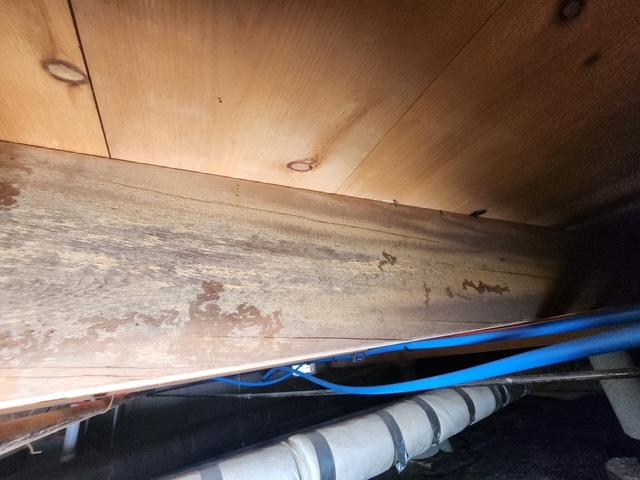
Mold contamination on a crawl space floor joist. A common find.
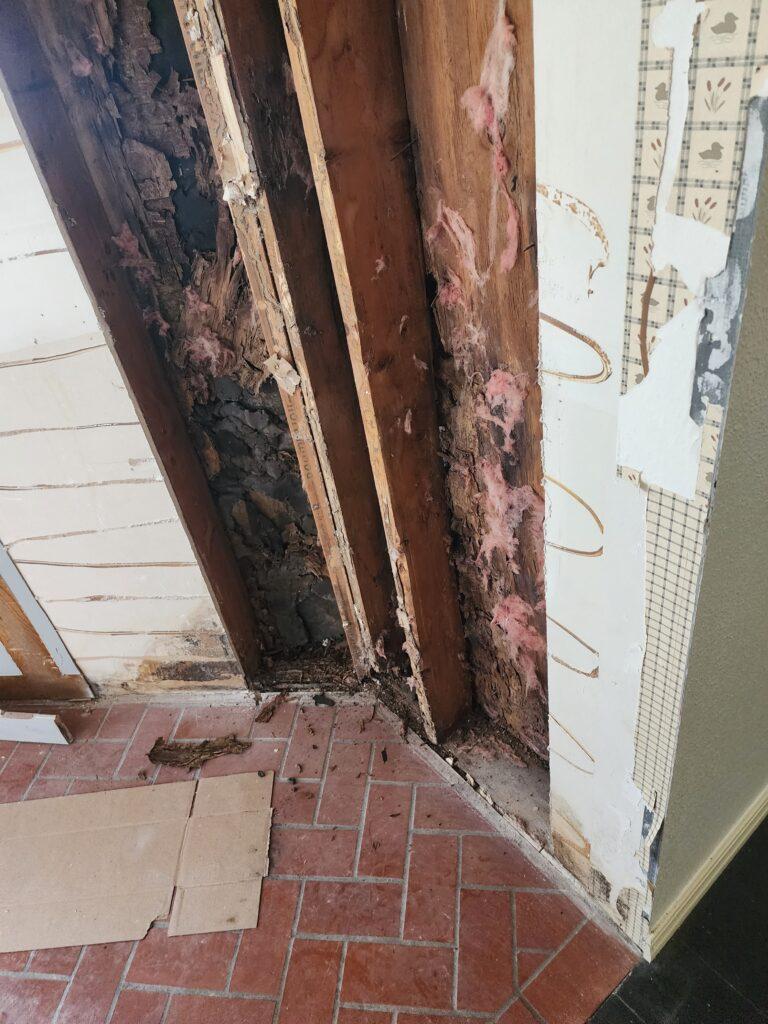
Behind a wall: rotted studs, wet insulation
How we do it
Mold needs three things to grow: moisture, a food source (wood, drywall, insulation), and optimal temperature. You can't remove the food source; your house is made of it. You can't control the weather, which is responsible for the temperature. But you can control the moisture. That's what we focus on.
- 1.Assess the entire environment. We don't just look at the mold. We check humidity levels, ventilation, plumbing, grading outside, HVAC ducts, unsealed penetrations around pipes and wiring. Everywhere moisture can enter.
- 2.Identify the problem. Not all mold situations are the same. We assess the type of contamination, the extent of the damage, and what's driving the moisture. If lab testing is needed, we contact a credentialed lab testing service.
- 3.Remove it. Not just spray it. Remove it. We set up containment, take out contaminated materials, HEPA-vacuum and filter the air, and clean every surface that can be saved.
- 4.Fix the moisture source. This is the step most companies skip. Whether it's a crawl space humidity problem, a grading issue, a plumbing leak, or poor ventilation. We fix what's actually causing the mold so it doesn't come back.
- 5.Repair the damage. We don't leave you with a torn-up house. We rebuild what the mold destroyed — drywall, framing, insulation, flooring. Even if it's a full kitchen or bathroom. One company, one encompassing project, start to finish.
- 6.Verify the results. Post-remediation verification (PRV) is how you know it actually worked. An independent test confirms the space is clean before the job is closed out. In over 30 years, Scott has never left a job half done. It always passes a PRV.
Why “mold removal” often doesn't work
Scott gets called in regularly to re-do work that another company already charged for. The pattern is usually the same: someone sprayed the mold, maybe wiped some surfaces, collected a check, and called it done. A few months later the mold growth is back, because the moisture never stopped and the real problem was never fixed.
The problem isn't just wasted money. It's that the homeowner thinks the problem is fixed. Their kids are still breathing mold spores. Their allergies keep getting worse. And they don't know why, because they already “had it taken care of.”
Here's what people don't realize about this industry: there's no license required in many states, including Missouri. If someone wanted to, they could print a certificate on their home computer, call it whatever they want, and hand it out. And there are dozens of people doing exactly that. They'll tell you they're certified, but by who? There's one legitimate certification body for mold remediation, and it's the IICRC. The rest is somebody's imagination and misleading marketing. Customers don't know what they don't know, and they don't want to spend big bucks on something they don't understand. That's how bad companies stay in business.
 Before
Another contractor’s “remedy” — paint over the wood and call it done.
 After
AfterDone the right way: mold removed, moisture controlled, fully encapsulated.
The health side
Repeated exposure to mold in the place where you live and sleep has a different effect than brief exposure elsewhere. Your body never gets a break from it. Genetic factors can make some people more susceptible than others, which is why one person in a household might be fine while another can't stop coughing.
Common symptoms include persistent allergies, headaches, sinus issues, respiratory problems, and worsening asthma, especially in children. If your doctor can't explain what's going on, it's worth checking your home.
Mold Remediation Projects
Real jobs. Real results.
Mold Behind a Wall
Homeowner had recurring health issues for months. We opened the wall and found extensive mold growth on the studs and insulation. The moisture source was an unsealed pipe penetration letting crawl space air into the wall cavity.
 Before
Mold and moisture damage hidden behind drywall
Mold on Floor Joists
White mold (Aspergillus) covering the floor joists in a crawl space. The homeowner had no idea it was there. This is the kind of mold you can't see from inside the house, but you're breathing it every day. We removed the mold, fixed the moisture source, encapsulated the space, and installed an AlorAir Sentinel dehumidifier to keep humidity under control for good.
 Before
Aspergillus on a floor joist. Scott writes “BAD” in it so homeowners can see what they’re breathing.
 After
AfterAfter: mold removed, space encapsulated, AlorAir Sentinel dehumidifier installed.
Frequently Asked Questions
What's the difference between mold treatment and mold remediation?
Treatment is a temporary fix; remediation is a permanent one. Mold treatment means someone sprays the mold with a product to kill it, but doesn't remove it and doesn't necessarily fix the moisture problem, so the spores are still there and the moisture source is still there. Mold remediation means we physically remove the active mold growth, clean every surface, and fix the moisture problem that caused the mold in the first place.
Is all mold dangerous?
Not all mold is equally harmful, but all growing mold indicates a moisture problem that needs to be addressed. Some types, like Aspergillus and Stachybotrys (also known as Toxic Black Mold), can be genuinely dangerous to your health, especially with repeated exposure in the place where you live and sleep. If lab testing is needed, we use a trusted third-party lab so you know exactly what you're dealing with.
I already paid another company to remove my mold and it came back. Why?
Because the moisture source was never fixed. The other company only treated the visible mold without addressing why it grew there. Mold needs moisture to grow, and if you don't fix where the water is coming from, the mold will always return. We trace the moisture to its source and fix that as part of every remediation job.
How long does mold remediation take?
It depends on the size and severity of the problem. A single-room issue might take a day or two. A whole-house remediation with crawl space could take a full week. We'll give you a clear timeline during the free inspection. No surprises.
Do I need to leave my house during mold remediation?
It depends on the scope of the work. For contained, single-room remediation you can usually stay in the home. For larger jobs involving multiple rooms or heavy contamination, we may recommend staying elsewhere during the active removal phase. We seal off work areas to prevent spores from spreading to the rest of the house.
Do you guarantee the mold won't come back?
Mold is a living organism, so no one can guarantee it will never appear again anywhere in your home. What we guarantee is the work. Every job ends with post-remediation verification (PRV) — an independent test that confirms the remediated area is clean. In over 30 years, Scott has never left a job with a failed PRV. We keep working until the job passes the PRV, so your air gets a clean bill of health. If we need to re-clean anything within the original scope of work, there's no extra charge.
Do you always do lab testing?
Not always — it depends on the situation, and it's ultimately the client's choice. Some jobs are small enough and straightforward that lab testing isn't necessary. When we determine testing would be valuable, we use a trusted third-party lab. We'll give you a clear recommendation during the free inspection.
Just a small patch of mold?
A spot on the bathroom ceiling. A musty smell in one closet. Mold growing on a windowsill. It might be nothing, or it might be the visible tip of a bigger problem behind the wall. Either way, we'll check it out and show you the truth. Small mold jobs are often the ones that save homeowners thousands by catching things early.
Mold everywhere?
Multiple rooms affected. Mold in the crawl space, behind walls, in the ducts. Health symptoms getting worse. We handle full-house mold remediation: containment, removal, moisture source repair, duct cleaning, and all other necessary repairs, as one coordinated project. Why hire five different companies when one can handle it all?
Either way, the inspection is free. Call 855-705-6653 and we'll tell you exactly what you're looking at.