The Crawl Space Gurus
Up to 40% of the air in your home
can come up through your crawl space.
If there's moisture down there, mold down there, or standing water down there, that air is yours to breathe inside your home. Your bedroom. Your kids' rooms. Crawl space repair isn't a home improvement project. It's a protect-your-health decision.
 Before
A crawl space that needs help. Dirt floor, contamination, and air rising into the home.
 Before
Mushrooms growing in the crawl space. When fungi take root, the moisture is way out of control.
 After
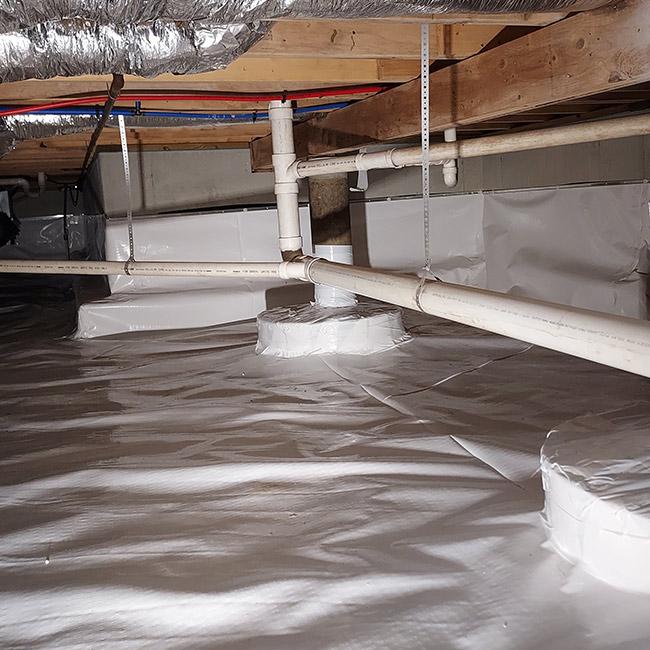
AfterAfter encapsulation: clean and dry
 After
AfterVapor barrier on walls and floor
The vent problem nobody tells you about
Building code requires crawl space vents. They were originally called flood vents, designed to let water evaporate after a flood event. That was before anyone understood that high humidity causes damage too. When people say “you need more airflow through your crawl space,” that's not completely true, because wet airflow will cause damage. If your air is coming through at 80% relative humidity and the wood in your crawl space is at 9% moisture content, that wood is gaining moisture with every breeze. The vents aren't helping. They're feeding the problem.
Crawl Space Installations: Vapor Barriers, Dehumidifiers & More
Vapor Barriers
First, know this: plastic is not a vapor barrier. Plastic has a permeability rating, which means moisture passes through it. We use virgin polyethylene resin, meaning it's not made from recycled materials, so it doesn't break down over time and it doesn't off-gas VOCs into your crawl space. Our minimum is 12 mil, which is already above the 10-mil industry standard. For crawl spaces with HVAC equipment, plumbing, or anything that requires regular service access, we install 20-mil with fiber reinforcement and puncture protection. Most companies in this area use the cheapest material they can find. Not us.
Dehumidifiers
In our climate, a vapor barrier alone often isn't enough. A properly sized commercial dehumidifier keeps humidity at the right level year-round. We don't install residential units that burn out in a year.
Sump Pumps
If you've got standing water, you need a sump pump. And it needs a proper pit, not a bucket with a pump dropped in it (yes, we've seen that). A real pit, properly installed, with a reliable pump.
Full Encapsulation
For crawl spaces with serious moisture problems, full encapsulation seals the space completely: walls, floor, and sealed vents, with a dehumidifier maintaining the environment. It turns a damp, moldy crawl space into a clean, dry space.
Mechanical Exhaust
Even in a fully encapsulated crawl space, we usually leave one vent with a humidostatically controlled exhaust fan in it. Here's why: let's say your dehumidifier fails and you don't notice for two or three weeks. Mold can start growing in 72 hours. That exhaust fan is set so it almost never runs, but if humidity gets really high, it kicks on automatically and pulls damp air to the outside until things are under control. It's not expensive, but it's the backup plan that keeps your crawl space safe even when something else goes wrong.
When was the last time someone looked at your crawl space?
Crawl spaces should be checked yearly. Most people have never had anyone look at theirs. Things we commonly find: wet or hanging fiberglass insulation (which doesn't work when it's wet), unsealed pipe and wire penetrations letting crawl space air into your living space and HVAC ductwork, and moisture damage nobody knew about.
And yes, we find termites. And damage. And a variety of other “life forms.”
Our assessments are free. We'll tell you what we find, show you photos, and give you clear options.
Crawl Space Projects
Before and after. This is what we do.
Full Crawl Space Encapsulation
Complete encapsulation with virgin polyethylene resin vapor barrier on walls and floor, sealed pipe penetrations, and dehumidifier installed. This crawl space went from damp and moldy to clean and controlled.
 Before
If your sump pump looks like this, it isn’t protecting anything.
 After
AfterVapor barrier on floor with sealed pipe penetrations
 After
AfterWalls and floor fully encapsulated
 After
AfterSump pump installed in a proper pit
 After
AfterWide view: floor and walls fully encapsulated, ready for a dehumidifier.
Frequently Asked Questions
Should I close my crawl space vents?
It's complicated. Building code requires vents, and the idea is that airflow keeps things dry. But in Southwest Missouri, our humid summers mean open vents pump wet air into your crawl space, making the problem worse. Closing them entirely can create other issues. The real solution is controlling humidity directly with encapsulation, dehumidifiers, and proper drainage.
What is crawl space encapsulation?
Encapsulation means sealing your crawl space completely (walls, floor, and vents) with a heavy-duty vapor barrier, then maintaining the environment with a commercial dehumidifier. It turns a damp, moldy crawl space into a clean, dry, controlled space. It's the most effective long-term solution for crawl space moisture problems.
What kind of vapor barrier do you use?
We use 12-mil virgin polyethylene resin vapor barriers when possible. If workmen regularly need to access your crawl space, then we use 20-mil virgin polyethylene resin vapor barriers with fiber reinforcement. These vapor barriers are puncture-protected and will hold up better under traffic. Our barriers are made in the USA, and don't off-gas. We're one of the only companies in the area that offers this level of material. The difference in durability and effectiveness is significant.
How often should my crawl space be checked?
At least once a year. Most homeowners have never had their crawl space checked, which means problems go undetected for years. Common things we find: wet or sagging fiberglass insulation, unsealed pipe and wire penetrations, standing water, and mold growth that's been there for a long time. And critters. (We have stories!) Our assessments are free.
Does crawl space moisture really affect the air in my house?
Yes. Up to 40% of the air you breathe on your first floor can be coming up from your crawl space through a natural process called the stack effect. If there's mold, moisture, or stagnant air down there, that's what your family is breathing. Fixing your crawl space is one of the most impactful things you can do for indoor air quality.
What is negative pressure, and why does it matter during crawl space work?
Negative pressure keeps mold spores from spreading into your living space while we work. It means we pull dirty air out of the crawl space and exhaust it to the outside, allowing only clean air to move in to your crawl space. If a company is doing mold remediation in your crawl space without creating negative pressure, the spores they're disturbing are going straight into your house through every unsealed penetration in your floor. It's one of the essential steps that separates real, professional remediation from amateur and potentially ineffective remediation.
What are common signs my crawl space has a problem?
Persistent musty smell in the home, allergy or respiratory symptoms that get better when you leave the house, sagging or water-stained insulation visible from the access panel, soft or bouncy spots in your floor, doors that won't close properly, and condensation on cold-water pipes or ductwork. If you have a vented crawl space and you've never had it checked, there's a good chance there's already a problem developing. Our assessments are free.
Can I do crawl space work myself?
For minor things like replacing a section of insulation or sealing a small penetration: sure, if you've got the access and the patience. But for anything involving mold, standing water, structural rot, or full encapsulation: no. Crawl spaces aren't optimal as a DIY environment. The work involves containment systems, negative pressure, HEPA equipment, PPE, and physical jobs in tight spaces with poor air quality. Most homeowners who try a DIY crawl space project end up wishing they hadn't started.
Why does humidity matter in my crawl space?
Wood absorbs moisture from humid air. Once crawl space humidity gets above about 60%, the wood in your floor joists and subfloor starts holding enough water for mold to grow on it. Above 70%, you get visible condensation, sagging insulation, and rot. In Southwest Missouri's humid summers, an unsealed vented crawl space can sit at 80%+ relative humidity continuously – for months. That's the climate driving most of the mold and structural problems we see, and the reason a properly designed and professionally installed moisture control system is critical.
What does a crawl space assessment involve?
We come out at no cost, walk the home with you to hear your concerns, then go under the house with cameras and moisture meters. We document everything: insulation condition, vapor barrier or lack of one, standing water, mold growth, structural issues, plumbing leaks, pest evidence, and ventilation. You get photos of what we find, including the parts that look fine. Then we sit down and walk you through it: here's what's wrong, here's what needs fixing now, here's what can wait. No pressure, no upsell.
What kind of insulation belongs in a crawl space?
In an unsealed vented crawl space, fiberglass batt insulation is the wrong material. It absorbs humidity, sags, grows mold, and stops insulating effectively. We see this in nearly every untreated crawl space. There are methods of insulation that can work in a conditioned crawl space. We'll recommend the approach that best fits your specific situation.
Just need a vapor barrier?
Maybe your crawl space is mostly fine but you want a vapor barrier installed before a problem starts. Or you need a dehumidifier swapped out. Or one section of insulation replaced. We do single-item crawl space jobs all the time. Prevention is cheaper than remediation.
Full encapsulation needed?
Standing water, mold on the joists, sagging insulation, no vapor barrier, no sump pump. The whole thing needs to be redone. We do complete crawl space transformations: clean out, remediate, encapsulate walls and floor, install dehumidifier and sump pump, seal every penetration. One company, one seamless project, done right.
Either way, the assessment is free. Call 855-705-6653 and we'll tell you exactly what you're looking at.
From the blog
Articles related to crawl spaces
Complete Crawl Space Encapsulation Services in Springfield, MO: Trusted Solutions to Keep Moisture and Mold at Bay
Protect your home from mold and structural damage wth expert crawl space encapsulation in Springfield, MO and the Ozarks. We offer a 5% price match guarantee and free inspections (within an hour of Springfield) to keep your home dry and healthy.
Jul 1, 2026
5 Signs You Might Have a Hidden Mold Problem in Your Home
Most people don't realize they have a mold problem until it's visible. Here are 5 warning signs to watch for before it becomes a bigger & more expensive issue.
Mar 30, 2026